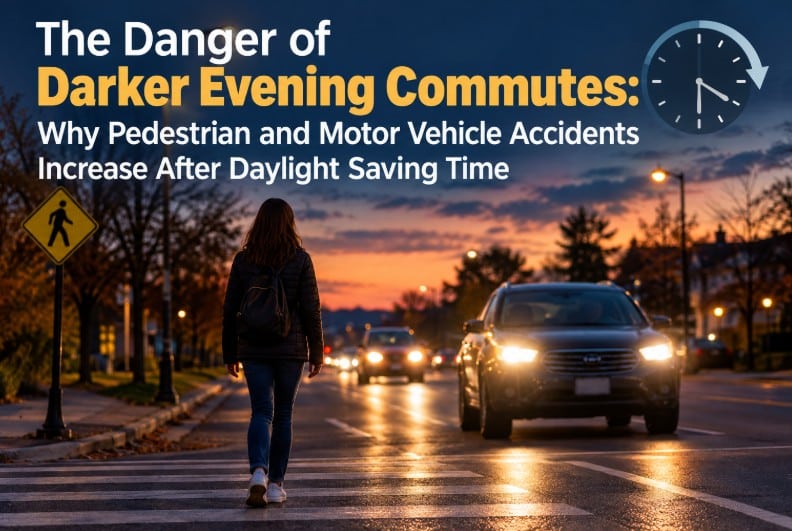
The evening commute can be one of the most dangerous times to be on the road. Heavy traffic, distracted drivers, reduced visibility, and sudden stops create the perfect conditions for rear-end collisions. As daylight hours become shorter during the fall and winter months, these risks can increase.
Rear-end accidents are among the most common types of motor vehicle collisions. While the driver who strikes another vehicle from behind is often considered responsible, determining liability is not always straightforward.
Understanding how fault is established can help accident victims protect their rights and pursue compensation for their injuries.
Why Rear-End Collisions Are Common During Evening Rush Hour
Evening traffic presents several challenges that can increase the likelihood of accidents. Drivers are often tired after a long workday, anxious to get home, or distracted by their surroundings.
Several factors contribute to rear-end collisions during the evening commute:
- Heavy traffic congestion: Stop-and-go traffic requires constant attention and quick reactions.
- Reduced visibility: Darkness, glare from headlights, and changing light conditions make it harder to judge distances.
- Driver fatigue: Tired drivers may have slower reaction times and reduced awareness.
- Distracted driving: Texting, adjusting navigation systems, or looking away from the road can lead to collisions.
- Following too closely: Drivers who fail to maintain a safe distance may not have enough time to stop.
- Poor weather conditions: Rain, fog, and wet leaves can reduce traction and increase stopping distances.
When traffic suddenly slows or stops, even a momentary lapse in attention can result in a serious accident.
Is the Rear Driver Always Responsible?
In many rear-end collisions, the driver who strikes the vehicle in front is found responsible. Drivers have a legal obligation to maintain a safe following distance and remain alert to changing traffic conditions.
However, the rear driver is not automatically at fault in every situation.
Liability depends on the circumstances surrounding the accident and the applicable state laws.
For example, the rear driver may be responsible if they:
- Were following another vehicle too closely.
- Failed to notice slowing or stopped traffic.
- Were speeding or driving too fast for road conditions.
- Were distracted by a phone or another activity.
- Failed to brake in time to avoid the collision.
Even when traffic stops unexpectedly, drivers are generally expected to maintain enough distance to respond safely to foreseeable changes in traffic.
Can the Front Driver Be Responsible for a Rear-End Accident?
Although less common, there are situations where the driver of the front vehicle may share responsibility or be primarily responsible for a rear-end collision.
Examples include:
Sudden, Unnecessary Braking
A driver who intentionally slams on their brakes without a legitimate reason may create a dangerous situation. This behavior, sometimes called brake-checking, can contribute to an accident.
Broken Brake Lights
If a vehicle’s brake lights are not functioning properly, drivers behind it may have difficulty recognizing that the vehicle is slowing down.
Unsafe Lane Changes
A driver who suddenly cuts in front of another vehicle and immediately brakes may leave insufficient space for the following driver to react.
Reversing Into Another Vehicle
In some cases, a vehicle may unexpectedly reverse into the car behind it, creating the appearance of a traditional rear-end collision.
These circumstances demonstrate why investigating the facts is essential before assigning responsibility.
What Happens When Multiple Vehicles Are Involved?
Chain-reaction collisions are particularly common during heavy evening traffic.
For example, one driver may stop suddenly, causing the vehicle behind them to brake. A third vehicle may then strike the second vehicle, pushing it into the first.
Determining liability in these accidents can be complicated because multiple drivers may have contributed to the crash.
Investigators may examine:
- The sequence of impacts.
- Vehicle damage and positioning.
- Dashcam or surveillance footage.
- Witness statements.
- Police accident reports.
- Evidence of speeding or distracted driving.
Depending on the circumstances, responsibility may be shared among multiple drivers.
Common Injuries Caused by Rear-End Collisions
Even relatively low-speed rear-end accidents can cause significant injuries.
The sudden forward-and-backward movement of the body places considerable stress on the neck, spine, and surrounding muscles.
Common injuries include:
- Whiplash: Neck injuries caused by rapid acceleration and deceleration.
- Back injuries: Herniated discs, muscle strains, and spinal damage.
- Concussions: Head injuries caused by sudden movement or impact.
- Shoulder injuries: Damage involving muscles, tendons, or joints.
- Soft tissue injuries: Sprains, strains, and ligament damage.
Some symptoms may not appear until hours or days after the accident. Seeking prompt medical attention is important, even when injuries initially seem minor.
What Should You Do After a Rear-End Collision?
Taking the proper steps following an accident can help protect your health and strengthen a potential personal injury claim.
If you are involved in a rear-end collision:
- Check for injuries: Call 911 if anyone requires emergency medical assistance.
- Move to safety: If possible and safe, move vehicles out of active traffic.
- Contact the police: Request an accident report documenting the collision.
- Gather evidence: Photograph vehicle damage, road conditions, and the accident scene.
- Exchange information: Obtain contact and insurance details from the other drivers.
- Seek medical care: Have a medical professional evaluate your injuries.
- Consult a personal injury attorney: Understand your legal rights before accepting an insurance settlement.
Avoid admitting fault at the scene or making assumptions about what caused the accident.
Can You Recover Compensation After a Rear-End Accident?
Victims injured in rear-end collisions may be entitled to compensation when another party’s negligence caused their injuries.
Depending on the circumstances and applicable laws, compensation may include:
- Medical expenses and rehabilitation costs.
- Lost wages and reduced earning capacity.
- Pain and suffering.
- Future medical treatment.
- Property damage.
Insurance companies may attempt to minimize claims or dispute liability, particularly when multiple vehicles are involved.
An experienced personal injury attorney can investigate the accident, evaluate available evidence, negotiate with insurance companies, and pursue appropriate compensation.
Protecting Your Rights After an Evening Commute Accident
Sudden traffic stops are an unavoidable part of rush-hour driving, but rear-end collisions are often preventable.
Drivers must remain attentive, maintain safe following distances, and adjust their speed to changing road and weather conditions.
If you have been injured in a rear-end collision, understanding who is responsible is an important first step toward protecting your rights.
Consulting a knowledgeable personal injury attorney can help you determine liability, understand your legal options, and pursue the compensation you may deserve.