A Fright on the Front Steps: Slip-and-Fall Accidents at Halloween
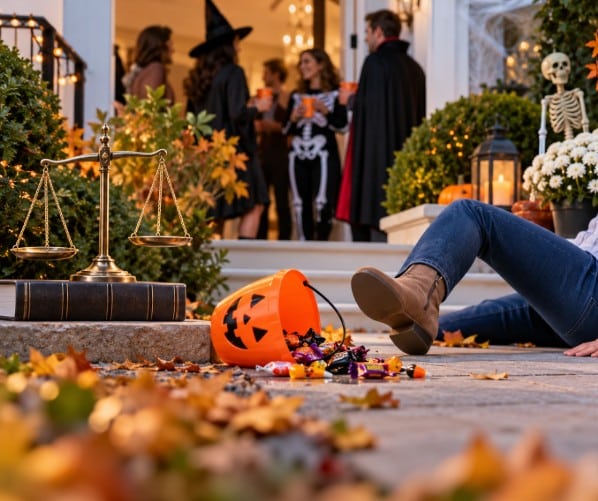
Halloween is a time for costumes, candy, and neighborhood fun. Families gather for trick-or-treating, haunted attractions draw large crowds, and homeowners welcome visitors to their properties. Unfortunately, the excitement of the holiday can also create conditions that lead to serious slip-and-fall accidents.
From poorly lit walkways and uneven steps to decorations that create tripping hazards, Halloween presents unique safety challenges. Understanding who may be responsible for these accidents and how to protect your rights can make all the difference if an injury occurs.
Why Slip-and-Fall Accidents Increase on Halloween
Halloween activities often take place after dark, when visibility is reduced and hazards become harder to spot. Property owners may unintentionally create dangerous conditions while decorating their homes or preparing for trick-or-treaters.
Common Halloween-related hazards include:
- Extension cords stretched across sidewalks or walkways
- Poor outdoor lighting
- Loose decorations and props
- Wet leaves covering uneven surfaces
- Unsecured rugs or mats
- Broken steps or handrails
- Uneven pavement or cracked sidewalks
- Fog machines creating visibility issues
Children wearing masks, costumes, or oversized shoes may be especially vulnerable to falls because their vision and mobility can be restricted.
Property Owners Have a Duty to Maintain Safe Premises
Homeowners and property owners generally have a legal responsibility to maintain reasonably safe conditions for visitors. While they are not expected to eliminate every possible risk, they must take reasonable steps to prevent foreseeable injuries.
Examples of responsible safety measures include:
- Keeping walkways clear of obstacles
- Providing adequate lighting near entrances
- Repairing damaged stairs or railings
- Securing decorations and cords
- Removing slipping hazards such as wet leaves or debris
When a property owner fails to address known dangers or ignores obvious hazards, they may be held liable if someone is injured.
Common Halloween Slip-and-Fall Scenarios
Halloween presents unique accident situations that may not occur during other times of the year.
Decorative Hazards
Many homeowners use elaborate decorations that create trip risks. Extension cords powering lights, animatronics, and sound systems frequently cross pathways used by guests.
If a visitor trips over these hazards and suffers an injury, the property owner’s actions may be examined to determine whether reasonable precautions were taken.
Poor Lighting Conditions
Dark pathways, burned-out bulbs, or insufficient porch lighting can make it difficult for trick-or-treaters to identify dangerous conditions.
Poor visibility often becomes a significant factor when establishing negligence in a slip-and-fall claim.
Weather-Related Conditions
Halloween frequently falls during a season when rain, moisture, and fallen leaves can create slippery surfaces.
Property owners should address hazardous accumulations when reasonably possible, especially in areas where guests are expected to walk.
Haunted Houses and Halloween Events
Commercial haunted attractions, festivals, and seasonal events can also become sources of slip-and-fall injuries.
Crowded environments may increase risks involving:
- Narrow walkways
- Temporary structures
- Uneven flooring
- Strobe lighting effects
- Hidden obstacles
Businesses operating these attractions must take reasonable measures to protect guests from preventable hazards.
Injuries Commonly Associated With Halloween Falls
Slip-and-fall accidents are often dismissed as minor incidents, but many result in severe injuries that require extensive medical treatment.
Potential injuries include:
- Fractured wrists and arms
- Broken ankles
- Knee injuries
- Hip fractures
- Back injuries
- Concussions
- Traumatic brain injuries
- Neck injuries
- Shoulder injuries
Children and older adults may face particularly significant risks, especially when falls involve stairs or hard surfaces.
Determining Liability After a Halloween Fall
Every slip-and-fall case depends on specific facts and circumstances. Establishing liability typically involves proving that:
- A dangerous condition existed.
- The property owner knew or should have known about the hazard.
- The hazard was not properly corrected or addressed.
- The dangerous condition directly caused the injury.
Evidence can play a crucial role in demonstrating what happened and whether negligence contributed to the accident.
Important Steps to Take Following an Accident
If you or a loved one is injured in a Halloween slip-and-fall accident, taking prompt action can help protect both your health and any potential legal claim.
Consider the following steps:
- Seek medical attention immediately.
- Report the incident to the property owner.
- Photograph the accident scene.
- Document the hazardous condition.
- Obtain witness contact information.
- Preserve footwear and clothing worn during the incident.
- Keep records of medical treatment and expenses.
Early documentation can be particularly valuable if conditions change or decorations are removed shortly after the accident.
Compensation May Be Available
Victims of slip-and-fall accidents may be entitled to recover compensation when another party’s negligence caused their injuries.
Potential damages may include:
- Medical expenses
- Future medical treatment costs
- Lost wages
- Loss of earning capacity
- Pain and suffering
- Rehabilitation expenses
- Emotional distress
The amount of compensation depends on the severity of the injuries and the long-term impact on the victim’s life.
Halloween Safety Tips for Homeowners
Homeowners can help reduce liability risks and keep visitors safe by taking a few simple precautions.
Before trick-or-treaters arrive:
- Inspect walkways and stairs.
- Secure all extension cords.
- Remove tripping hazards.
- Test outdoor lighting.
- Sweep away leaves and debris.
- Repair damaged railings or steps.
- Keep pets secured away from guests.
A few minutes of preparation can significantly reduce the likelihood of an accident.
Final Thoughts
Halloween should be remembered for costumes, candy, and community fun, not emergency room visits. Unfortunately, poorly maintained properties, inadequate lighting, and hazardous decorations can quickly transform a festive evening into a painful and costly experience.
Whether you are a homeowner welcoming trick-or-treaters or a visitor enjoying the holiday festivities, paying attention to safety can help prevent serious slip-and-fall injuries. When negligence contributes to an accident, understanding your legal rights is an important step toward protecting your health, financial recovery, and future well-being.